

Microsoft
Giving agents their own computer, without giving up control
Senior UX Designer · 2026
Computer use lets agents in Microsoft Copilot Studio operate websites and desktop apps the way a person does. I was the lead designer from private preview through general availability.
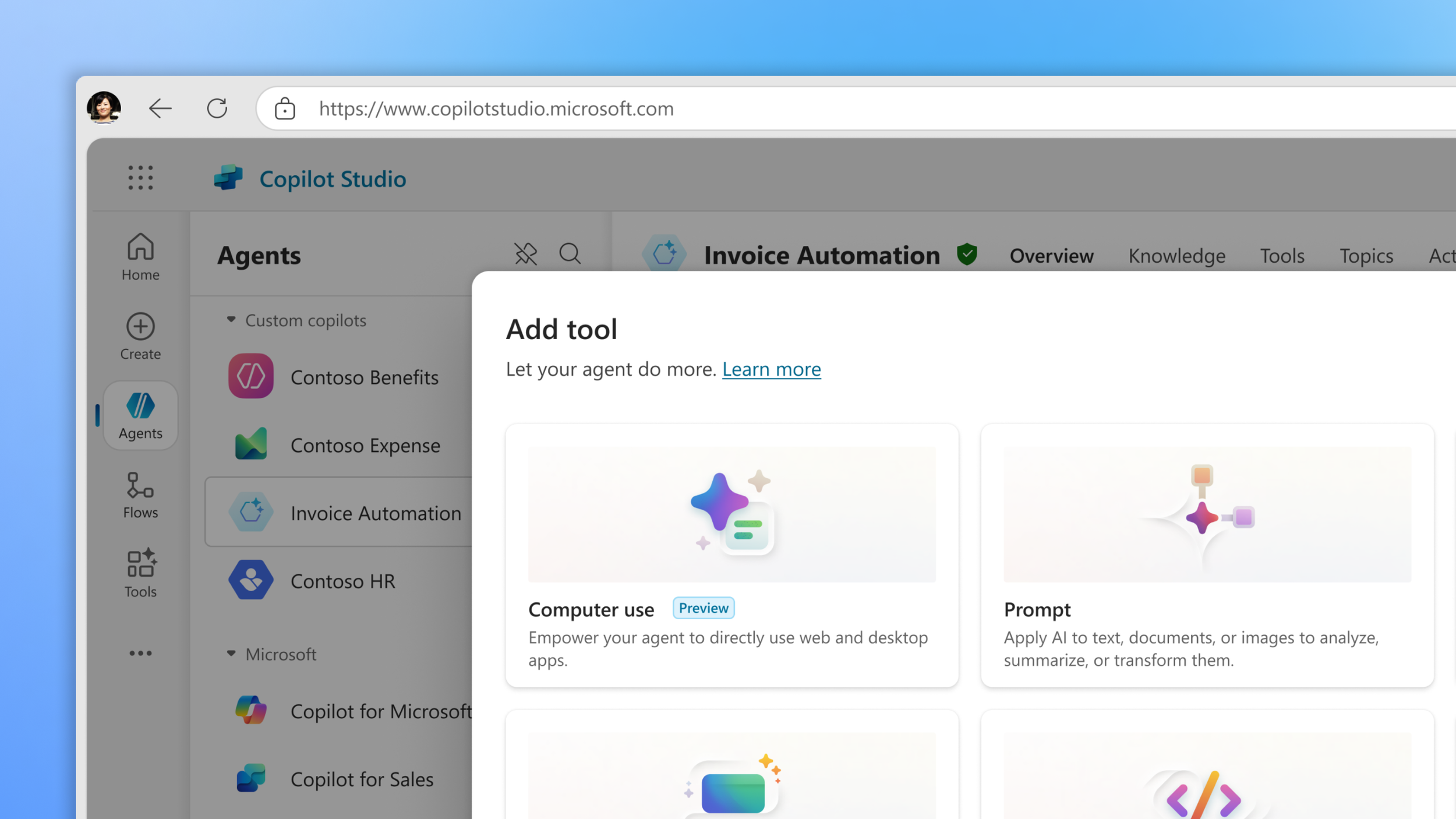
The model could use a browser. Everything around it was new.
Computer use gives a Copilot Studio agent its own computer. A maker describes a task in plain language. The agent then clicks, types, and reads the screen to get it done. It's built for the work traditional automation handles badly: apps with no API, and interfaces that change often.
The model could already operate a browser. The product problem was everything around it. Makers had to tell the agent what to do, give it a machine, sign it into systems safely, test behavior that isn't the same twice, and understand what happened when a run went wrong. None of that existed in Copilot Studio yet, and each step was a place where a first-time maker could give up.
I owned authoring and configuration, testing, human-in-the-loop states, credentials, allow-lists, and the hosted browser experience. I partnered with another design team on run history and observability. Private preview shipped in under 100 days. I designed that release, the public preview, and the longer-term vision in parallel, so engineering could see where the product was heading before they built each step.
Highlight 01 · Security
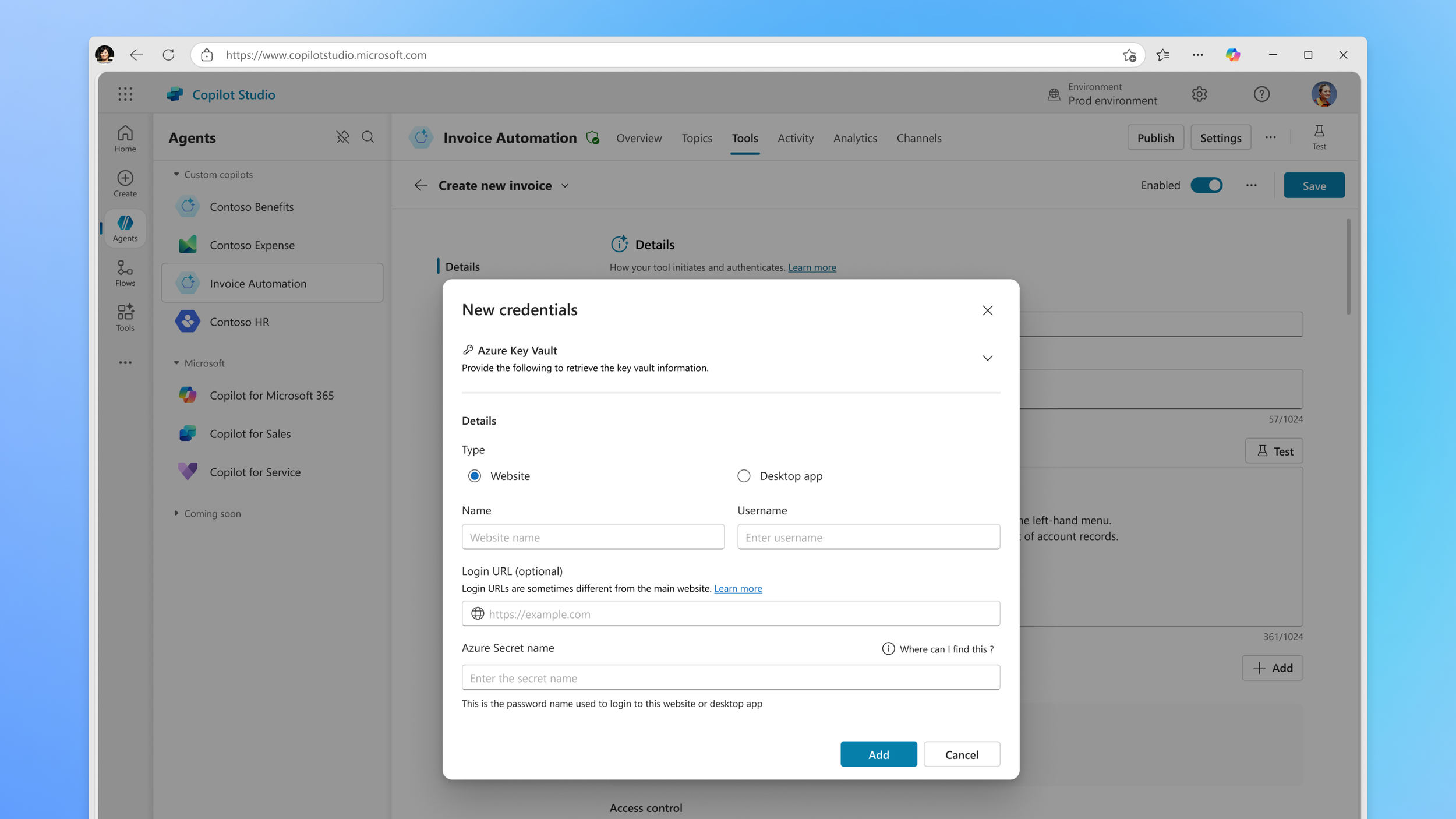
Keeping passwords out of the instructions
During private preview, our research team ran one-on-one walkthroughs with customers. Watching the recordings with my PM, I noticed something in a few of them: makers were typing passwords straight into the agent's instructions. It was the easiest way to get the agent signed in, and it worked. It also put credentials in plain text, in a field that gets shared, copied, and sent to a model.
In sessions focused on whether the agent could finish the task, it was easy to miss. To me it was a glaring security problem. I raised it and pushed for a dedicated Credentials surface, backed by a secure key vault. Makers store a login once and point the agent at it, and the password never appears in the instructions.
I paired credentials with allow-lists, which define exactly which sites and apps the agent is allowed to touch. If a run tries to go anywhere else, it stops.
The tradeoff was real. It meant one more setup step, and one more surface to build, on a feature whose whole pitch was "just describe the task." But an agent that IT won't approve is an agent nobody ships. That argument landed with Microsoft's broader push on customer security. Credentials and allow-lists shipped with public preview, and the credentials design was featured in several sessions at PPCC (Power Platform Community Conference).
Highlight 02 · First run
Making the hosted browser the default
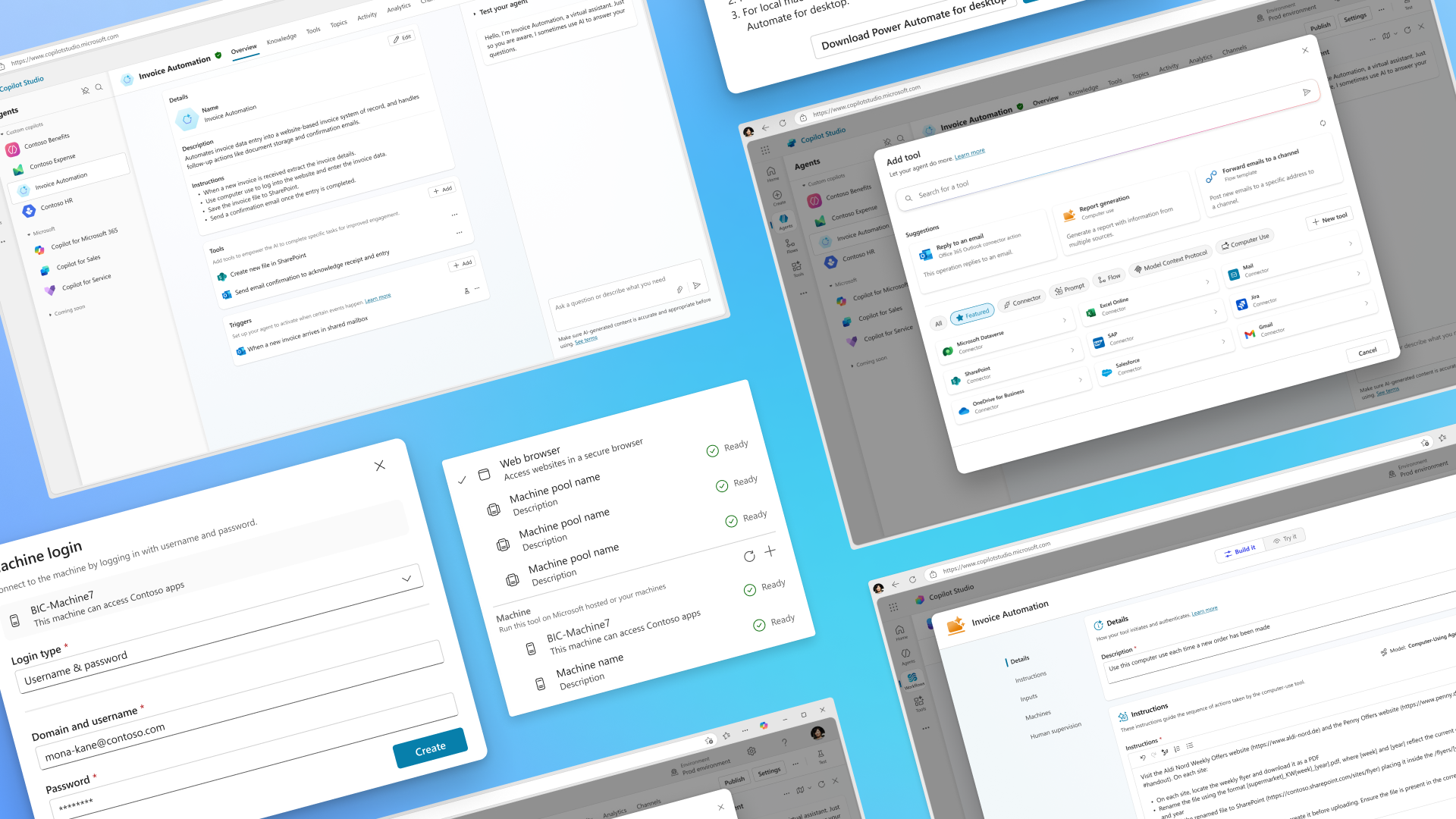
Computer use had a hidden second user. The maker building the agent usually wasn't the person who could set up the machine it ran on. That took an admin, with a completely different skill set. So a maker could build an agent, then get stuck on setup they didn't know how to do.
Machine setup was painful in private preview, better in public preview, and still the biggest barrier to a first run. Research also showed that most makers weren't sure what computer use could do yet. They were trying it to find out, and they didn't need a custom machine for that.
The hosted browser, powered by Windows 365, arrived in public preview as one option among several. For GA, I made it the default. Now a maker can add computer use and run it with no machine setup at all. Registering your own machine is still available for internal sites and desktop apps, but it's no longer the first thing people hit. I made the first run easier in two other ways. I added structure to the instruction box (ordered and unordered lists, and clearer placeholders) and starter templates for common tasks, so people started from a good example instead of a blank box.
The tradeoff: the hosted browser limits what the agent can reach. I accepted that because the default should match what most people are actually doing, and early on, that's exploring.
Highlight 03 · Testing
Shipping testing on a pattern that already existed
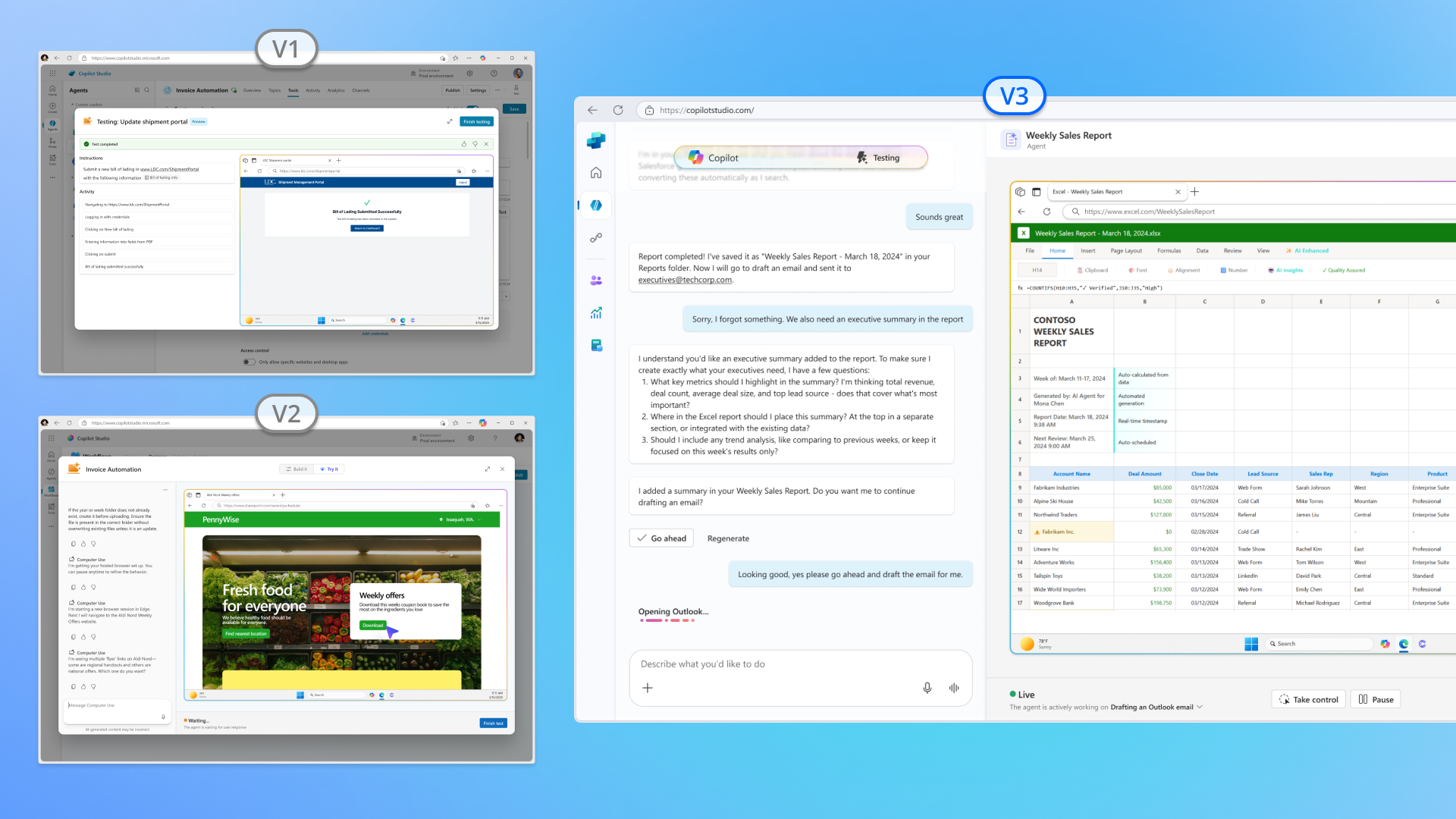
Traditional automation does the same thing every time it runs. Computer use doesn't. Makers need to see what the agent did and also why it did it, so they can fix their instructions.
I designed a wide range of testing options. But testing kept rising and falling on the roadmap as other feature areas pulled engineering away. What shipped was an extension of Copilot Studio's existing tool-testing pattern. It shows the agent's screen and its reasoning side by side. Makers can watch it work, spot the step where it went wrong, and adjust.
Building on an existing pattern made testing shippable while priorities kept shifting. It also meant makers didn't have to learn a new way to test. I added the designs to Copilot Studio's shared tools library so other teams building agent tools could use them.
Outcome
From private preview to GA in about a year
Private preview: shipped in under 100 days.
Public preview (September 2025): added the hosted browser, credentials, allow-lists, and starter templates.
General availability (May 2026): the hosted browser became the default path.
Adoption: grew steadily through public preview and GA.
Reuse: the testing pattern became part of the shared library other Copilot Studio tools build from.