
BRIEF
The Dell Design website was created as a marketing tool to attract prospective talent. I worked with designers at each of Dell’s seven studios to showcase their site and tell their story. The initial release was scheduled for CES 2017. Since then, the small team has revisited it every 6 months.
This site highlights the stories behind Dell products, career opportunities for designers, studio locations and details about how our teams approach each design challenge.
web design. creative direction.
PROCESS
A bit of context
The idea for this site originated from an awkward conversation. Without naming names, a Dell Design executive had just finished giving a presentation and was speaking with audience members. Some asked if his studio had a site they could go to learn more about their work, and potentially apply for roles. That didn’t exist.
Fast forward a few months and a group of designers in our Amsterdam office is working on creating such a site. The initial design direction wasn’t sitting well with the executive, so the effort was transferred to the Austin office.
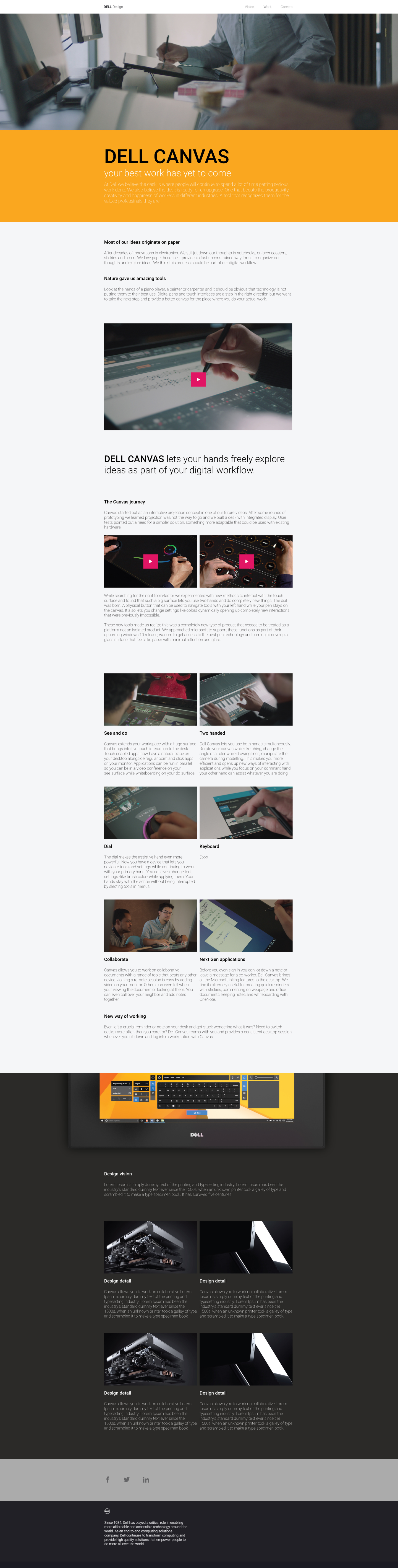


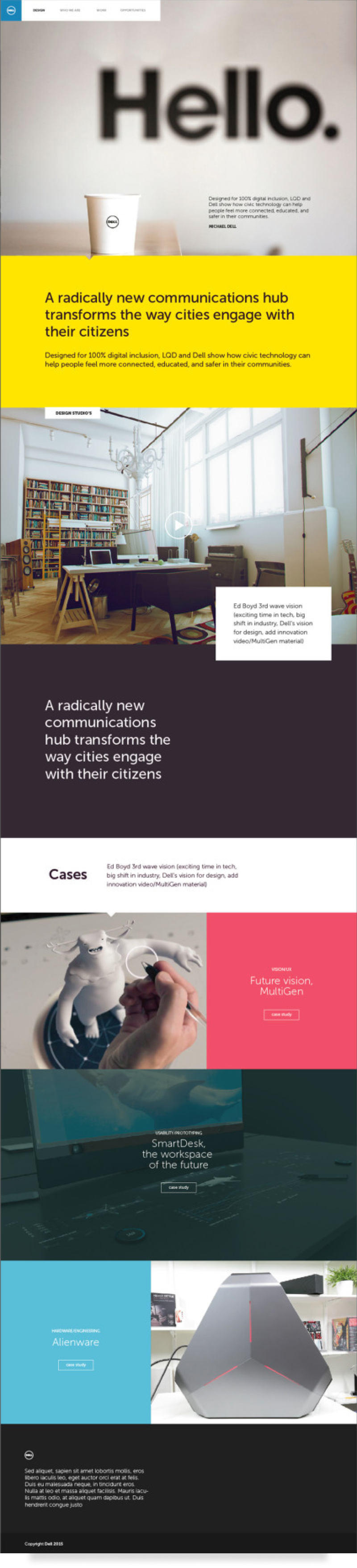
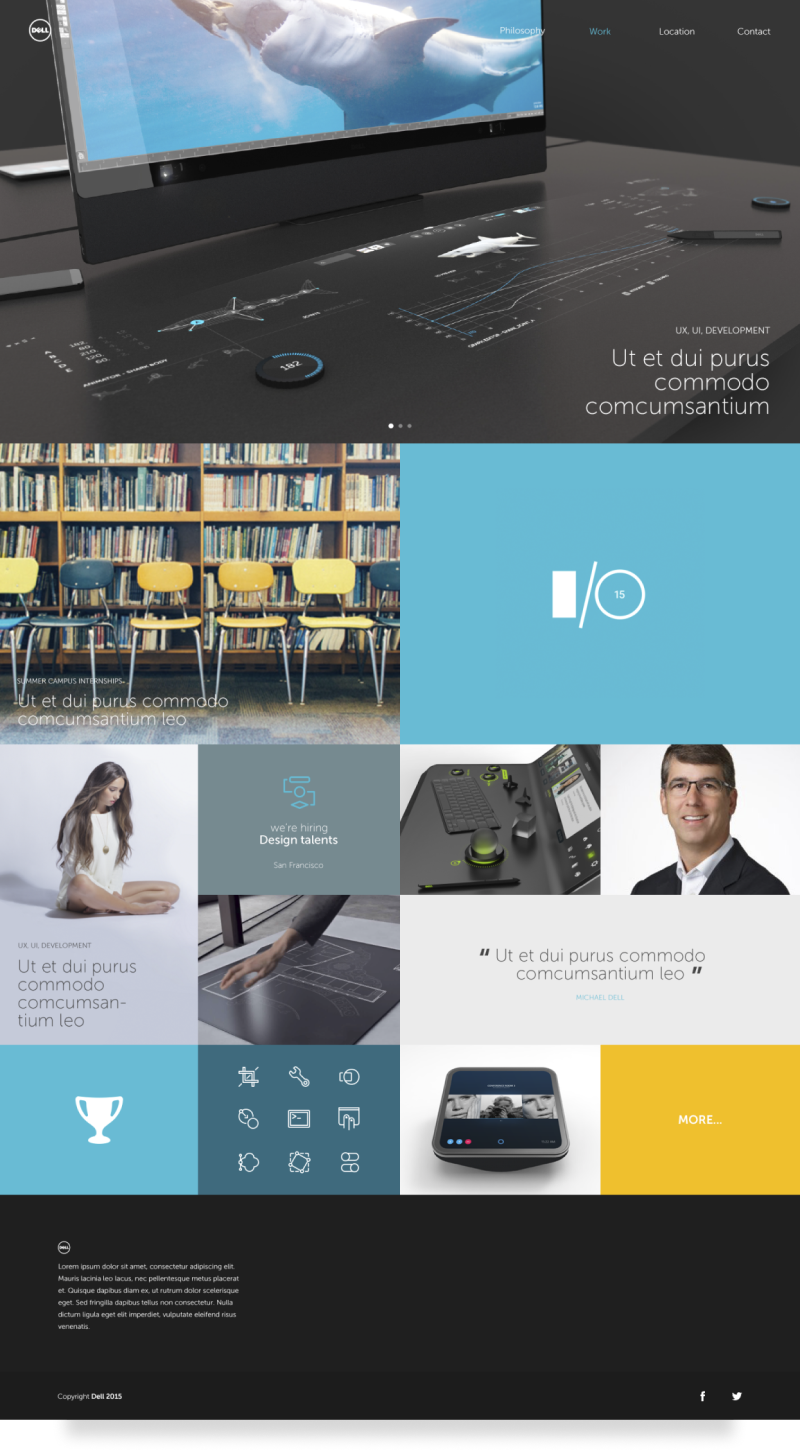
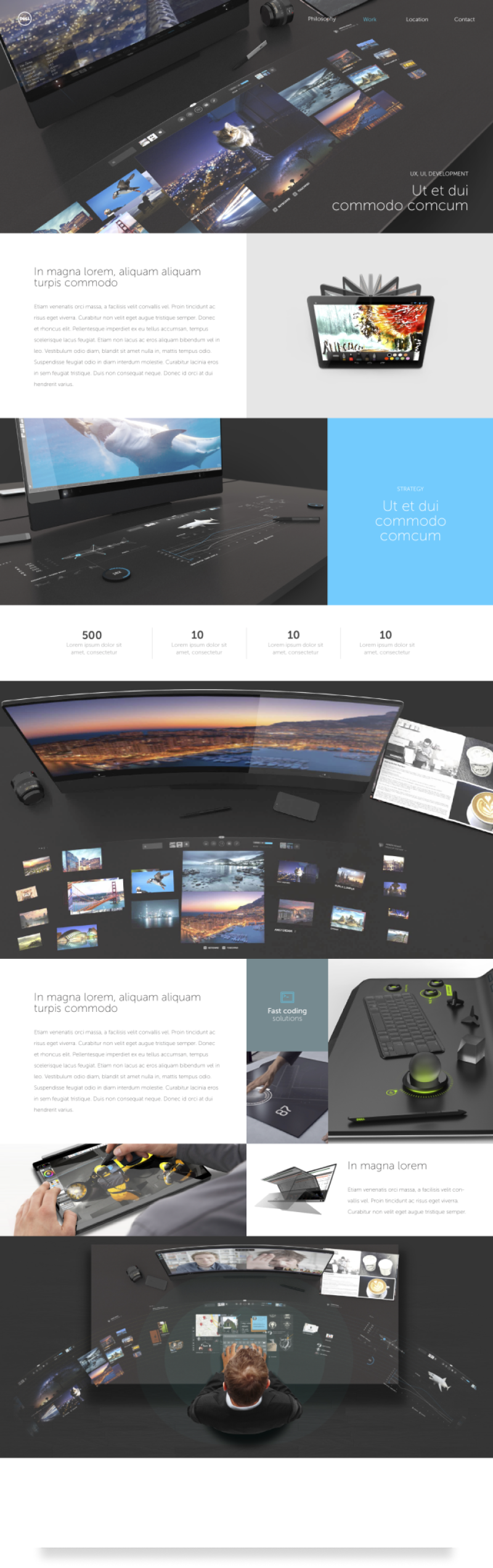
I was assigned to tackle the project and deliver a finished website in just 5 weeks. The executive wanted to showcase the site at CES 2017.
Without any time to waste, I began pouring through the exisiting site, looking for what content was missing and what was complete. I collaborated with our teams in Amsterdam and Taipei, writing articles about their studio locations and product expertise.
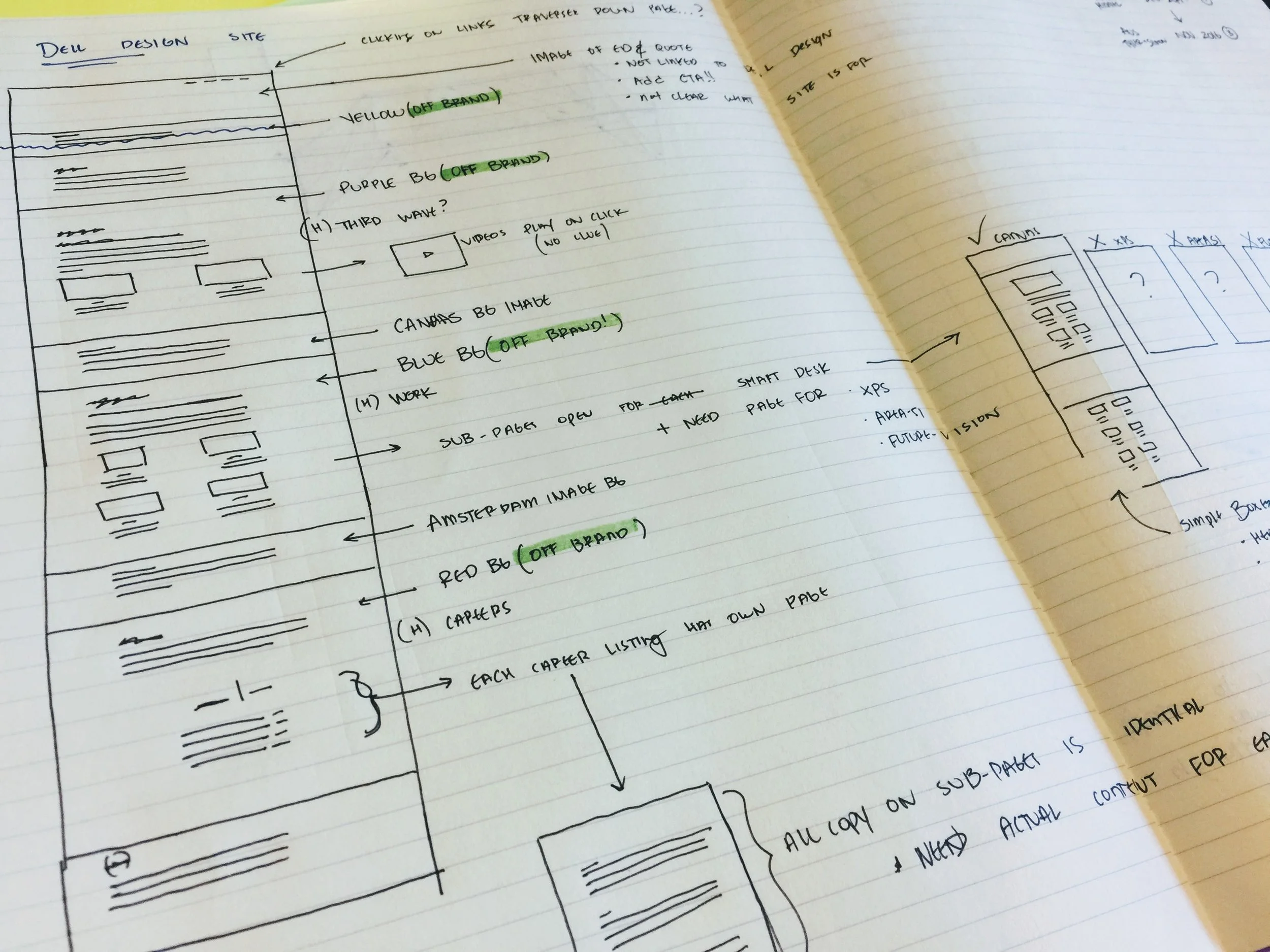
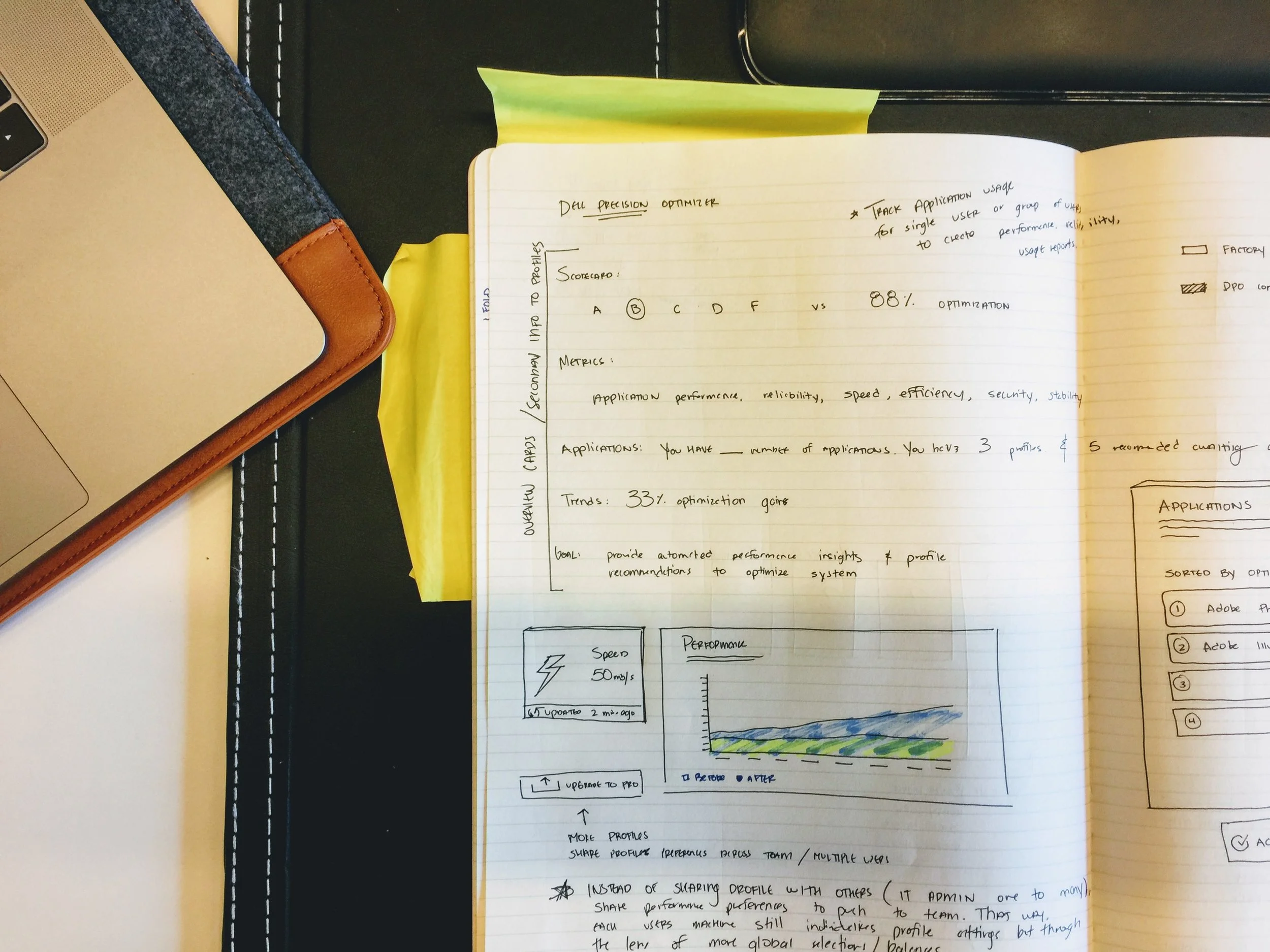
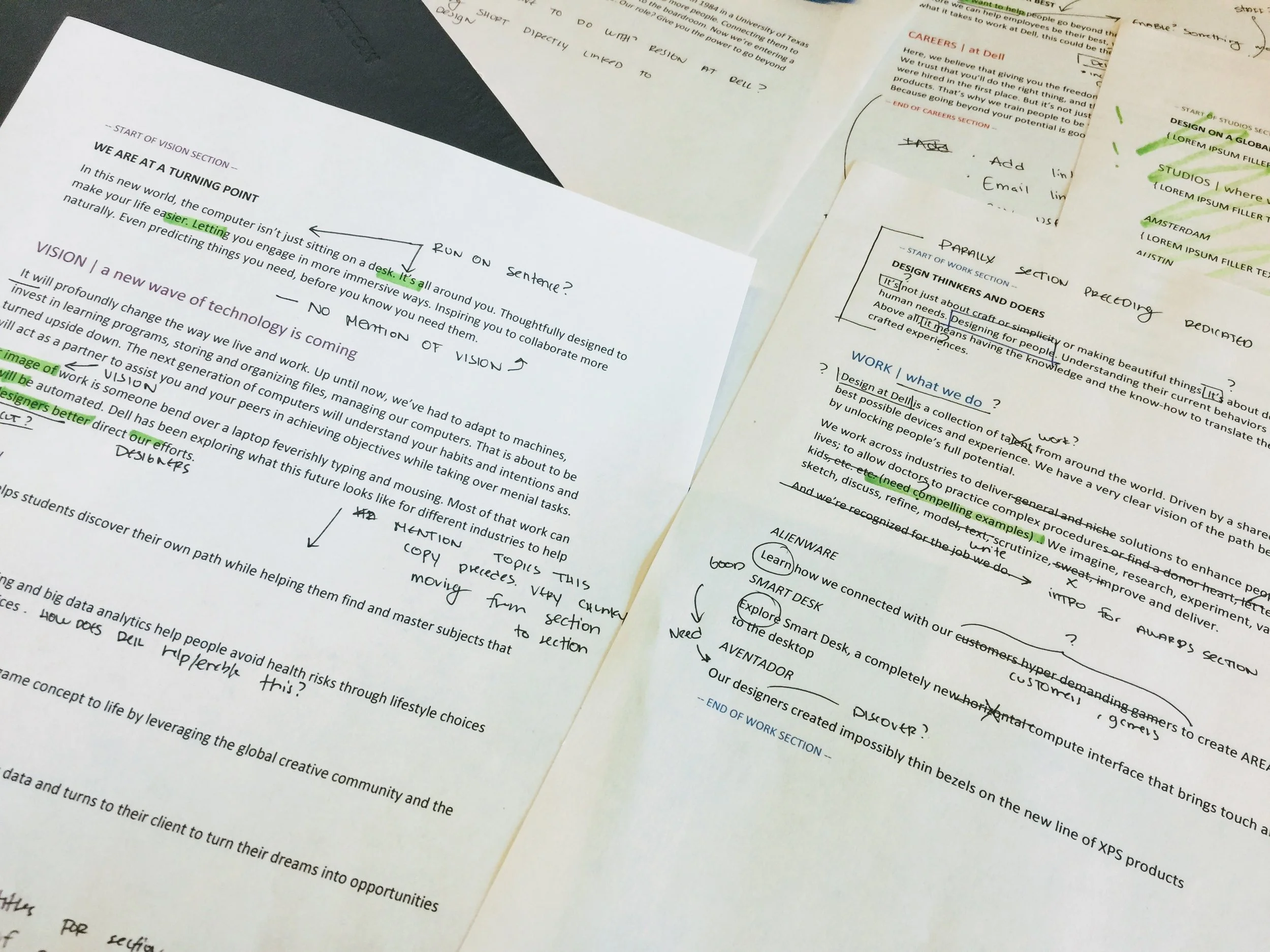
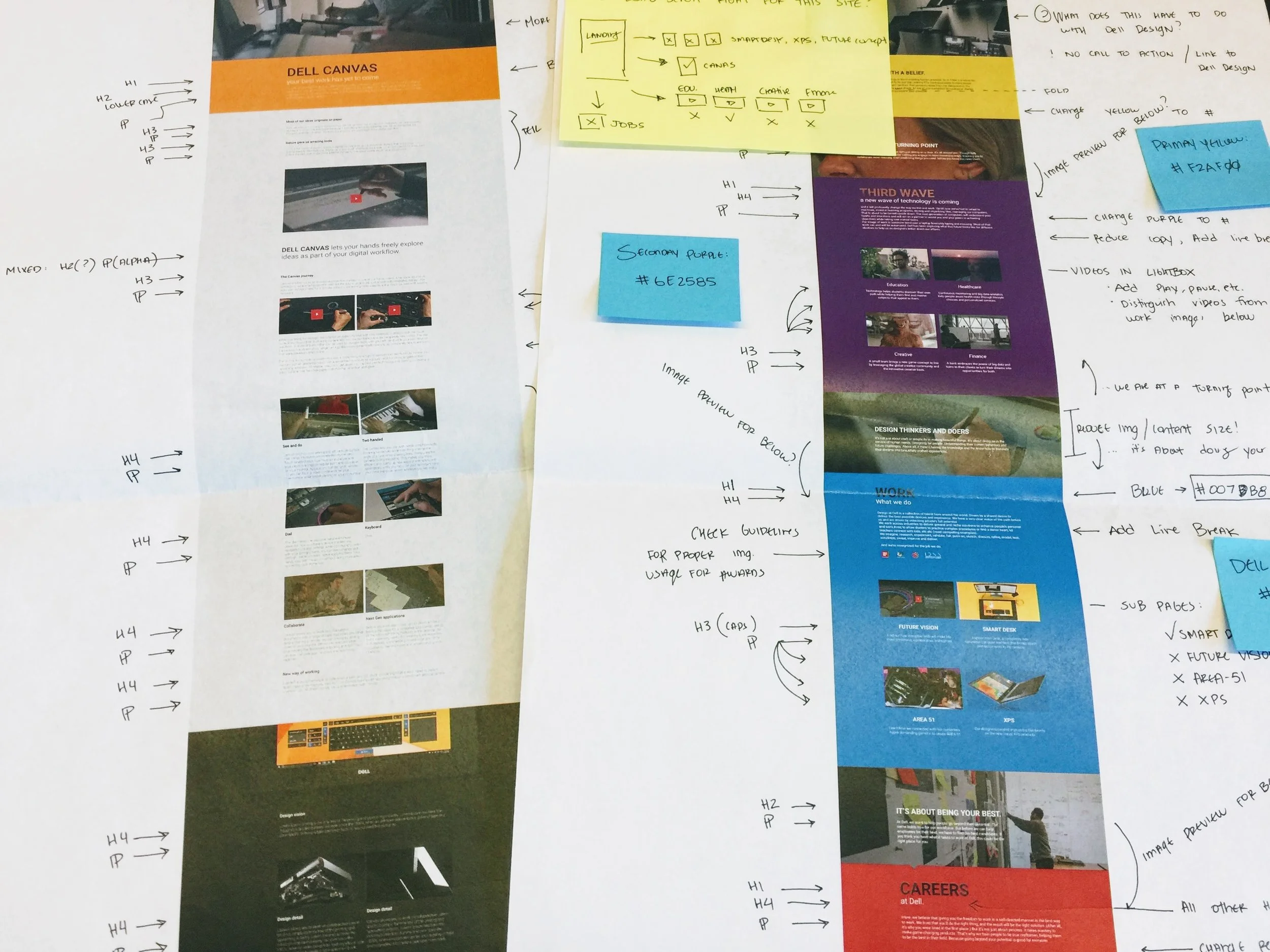
Mood boards. Inspiration. Style guides.
Once all the content was gathered, I began creating mood boards for each of the website sections. I realized the existing site wouldn’t scale to accommodate this much information. The one-page design would become overly complex and lengthy.
With the mood boards filled with imagery and inspiration, I began working on an updated site design to deliver alongside the original deliverable.
Wireframes + new directions
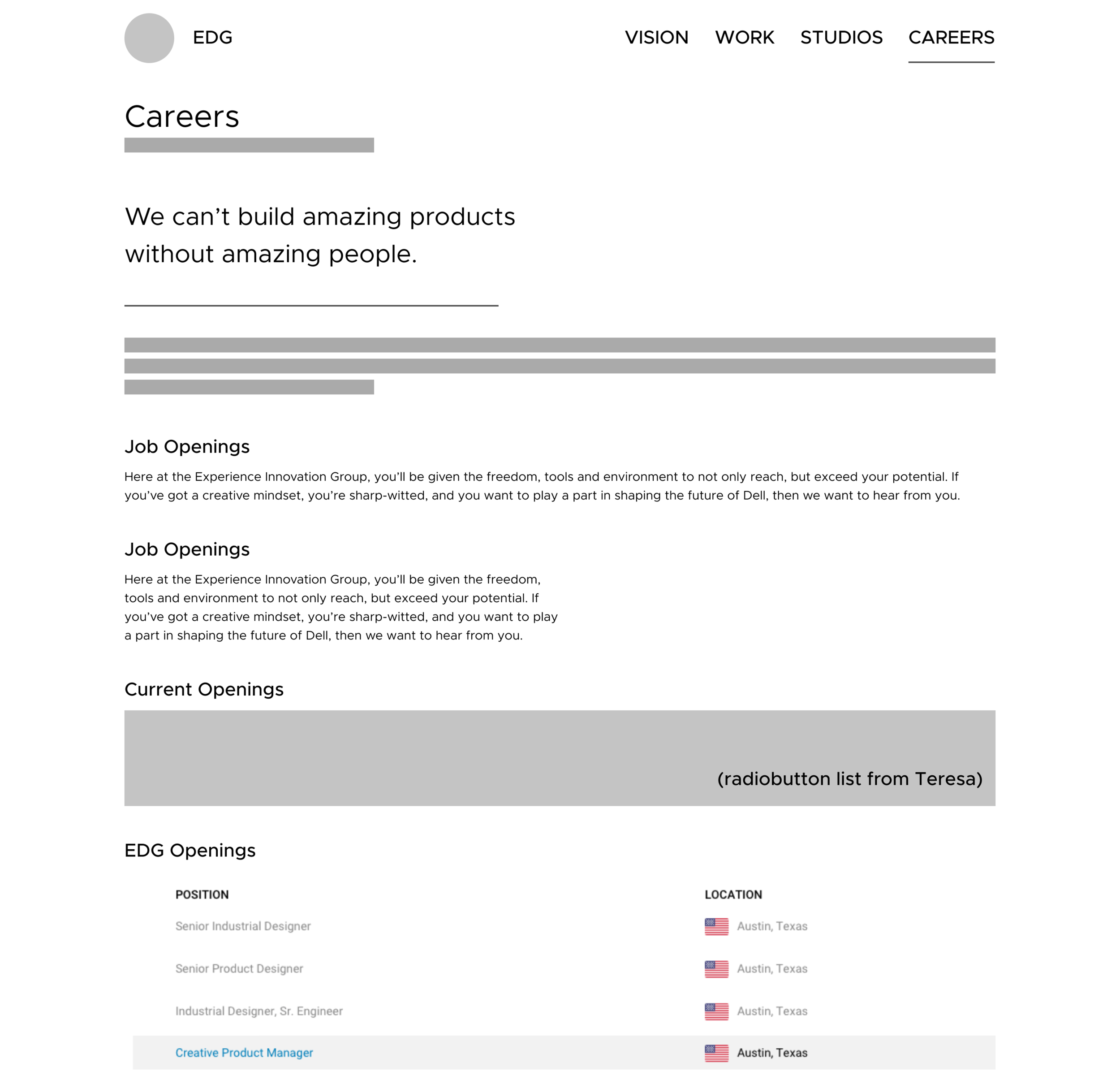
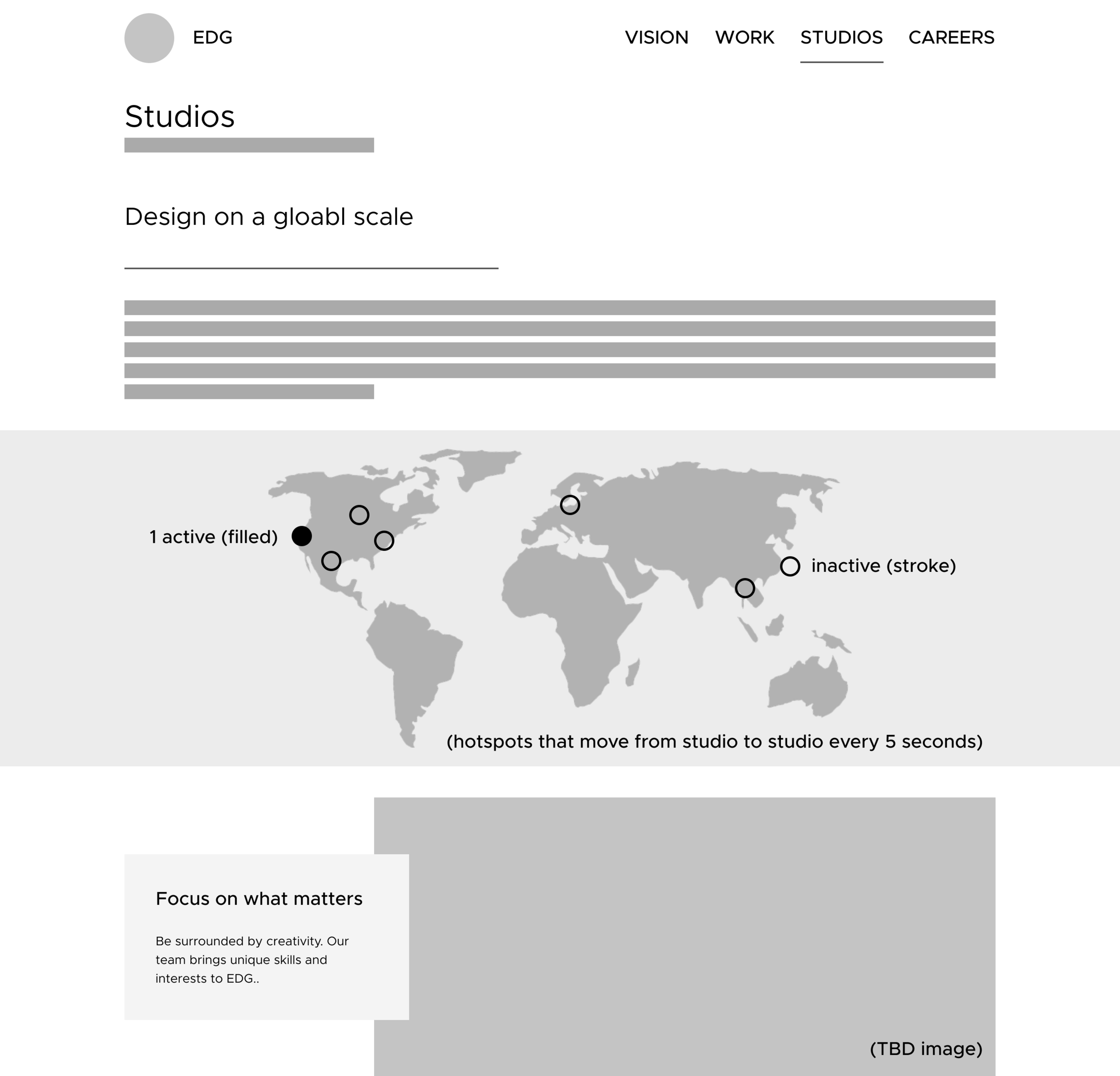
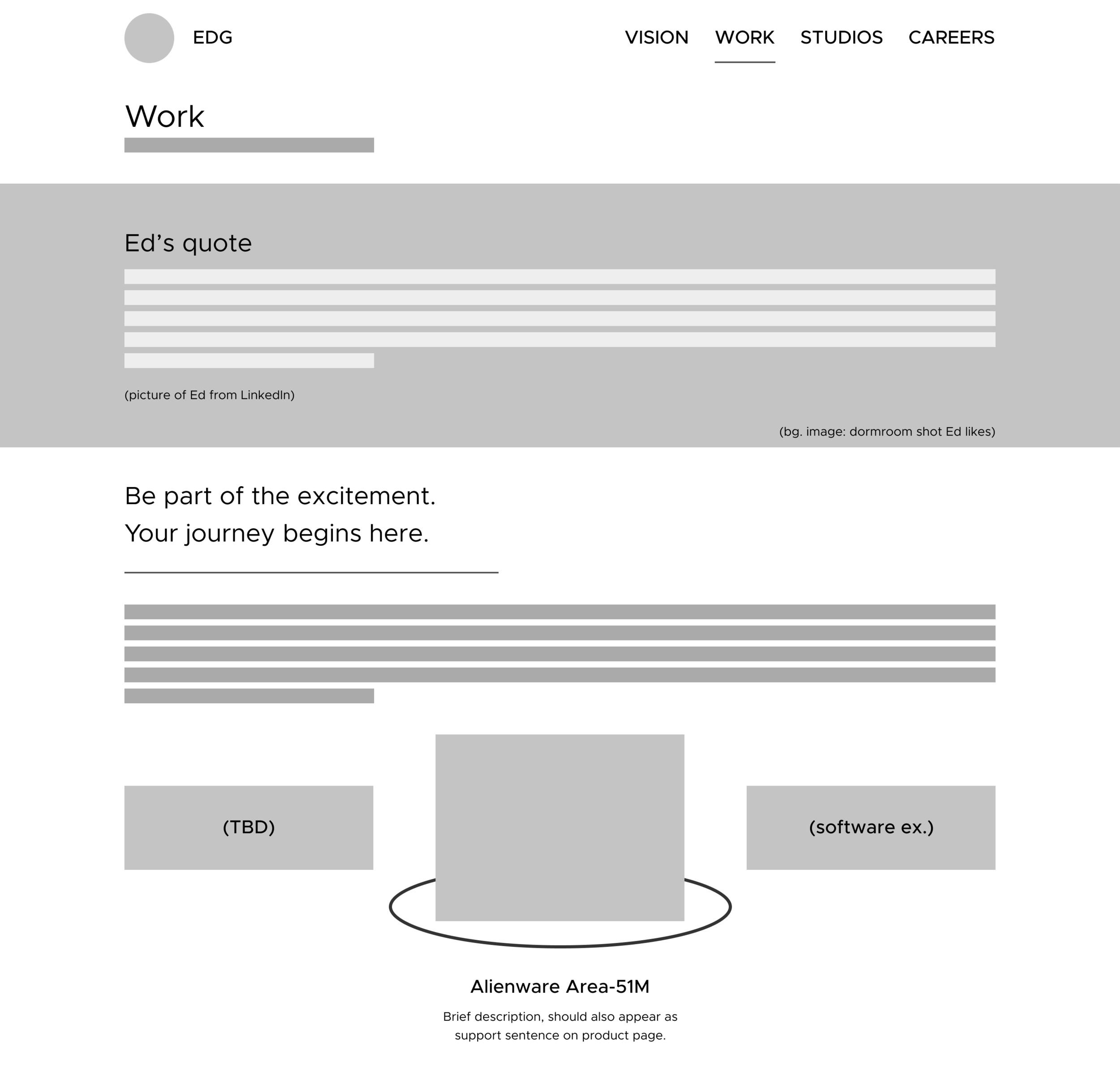
Wireframes helped me explore different layouts and site navigation. The team wasn’t allocated much dedicated time, so these helped me iterate through ideas without investing too much time on visuals. Once the direction was agreed upon, I mocked up how we could leverage social channels to also share our story. Dell Design (EDG) didn’t have a team presence on dribbble, Behance, Twitter, Instagram, or any other network.
Showcasing Dell hardware
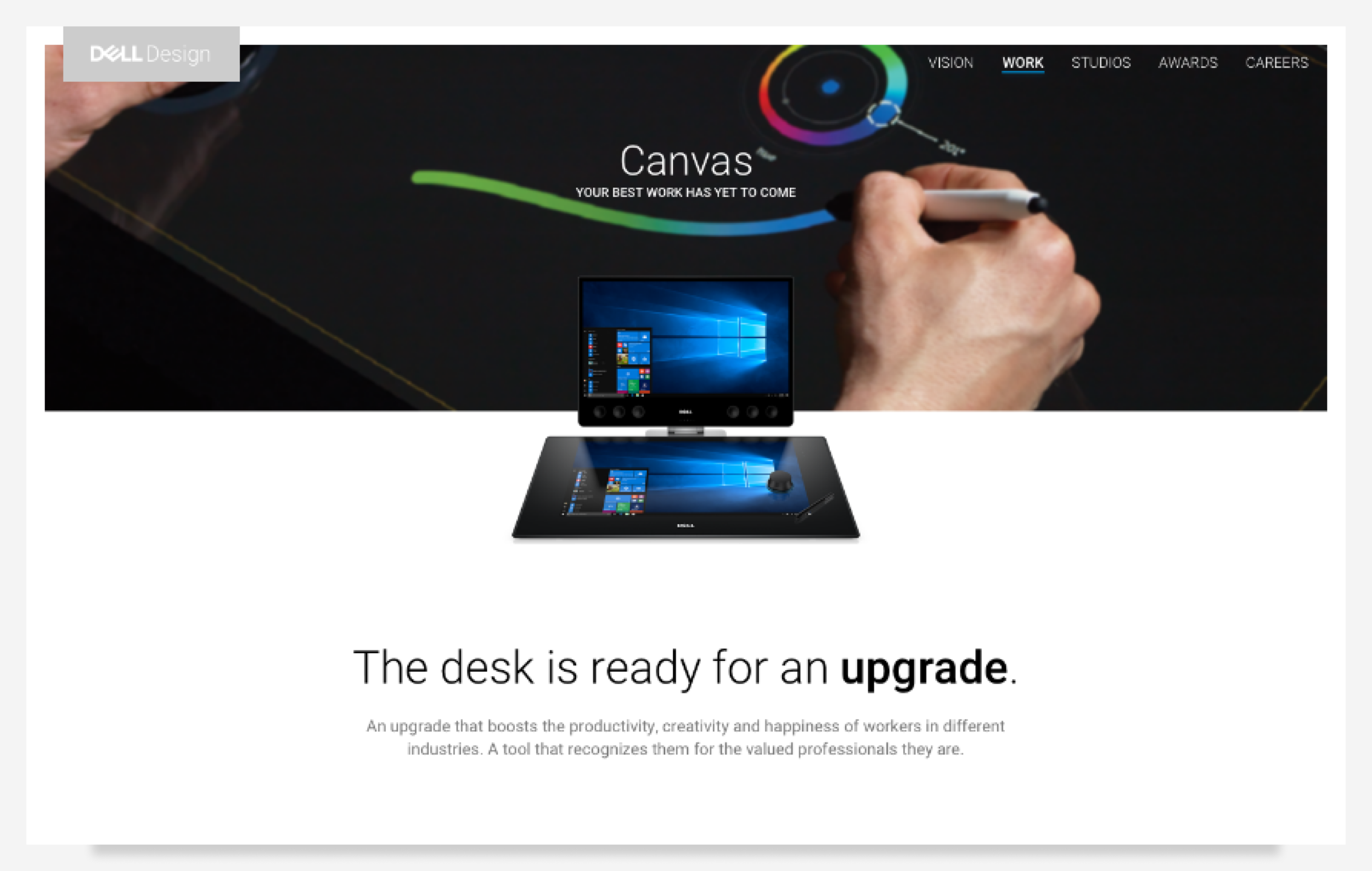
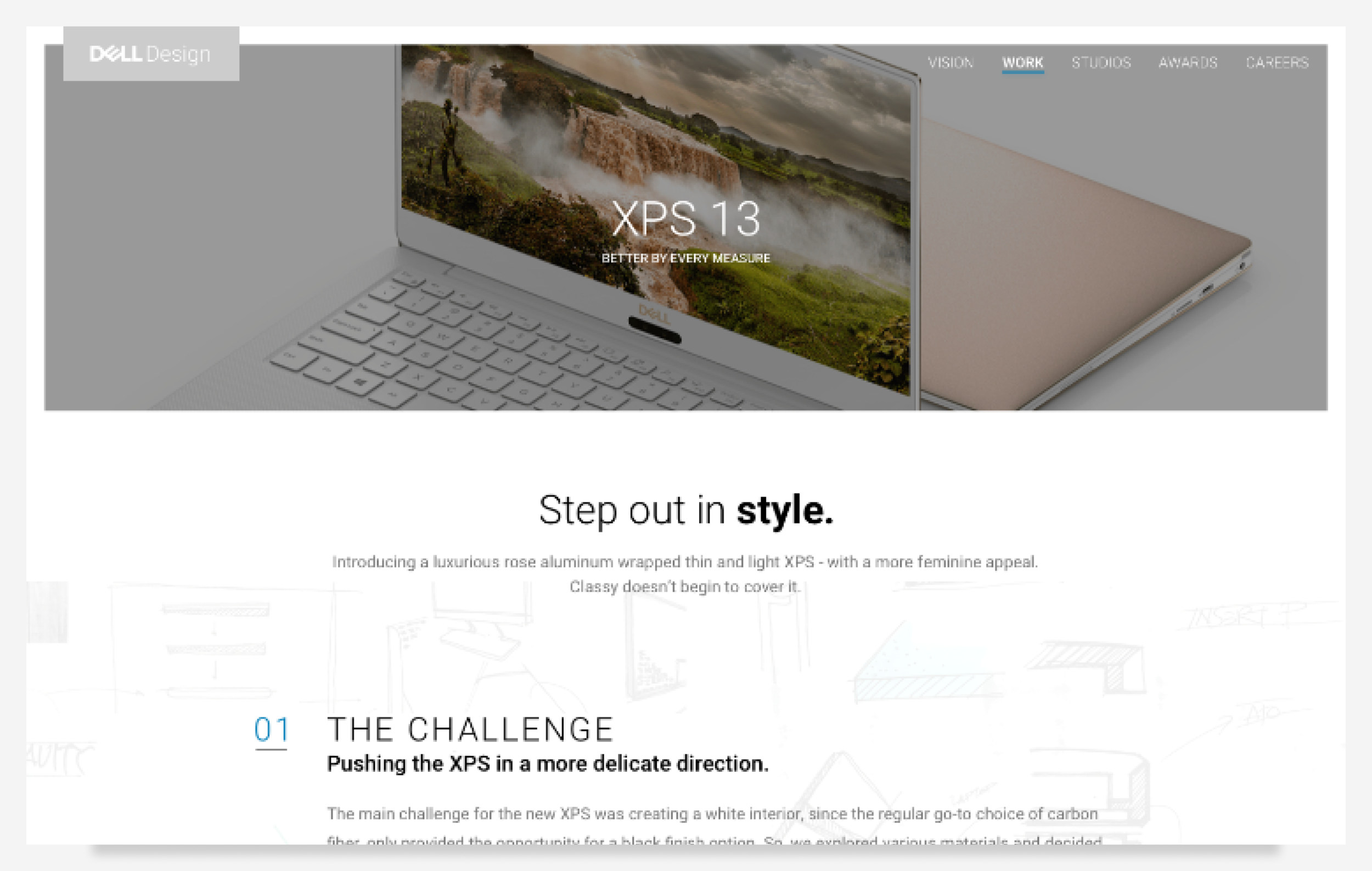
I wanted to approach the design of each page with a focus on future-proofing and space to breathe. Dell hardware designs are beautiful and unique. I wanted to ensure the site reflected that, setting the stage for images and interactions to speak with the user instead of the site housing them.
Figma to the rescue
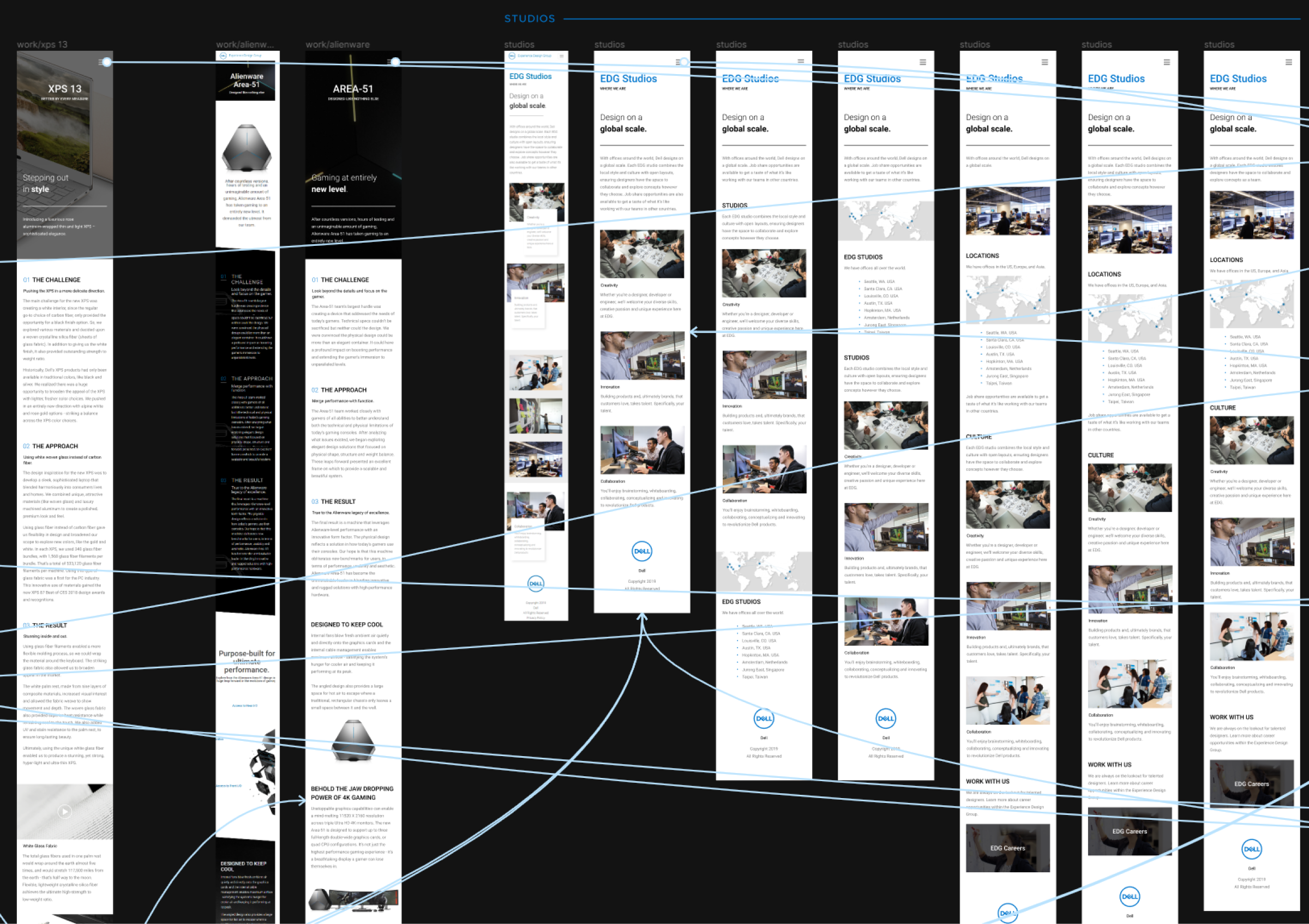
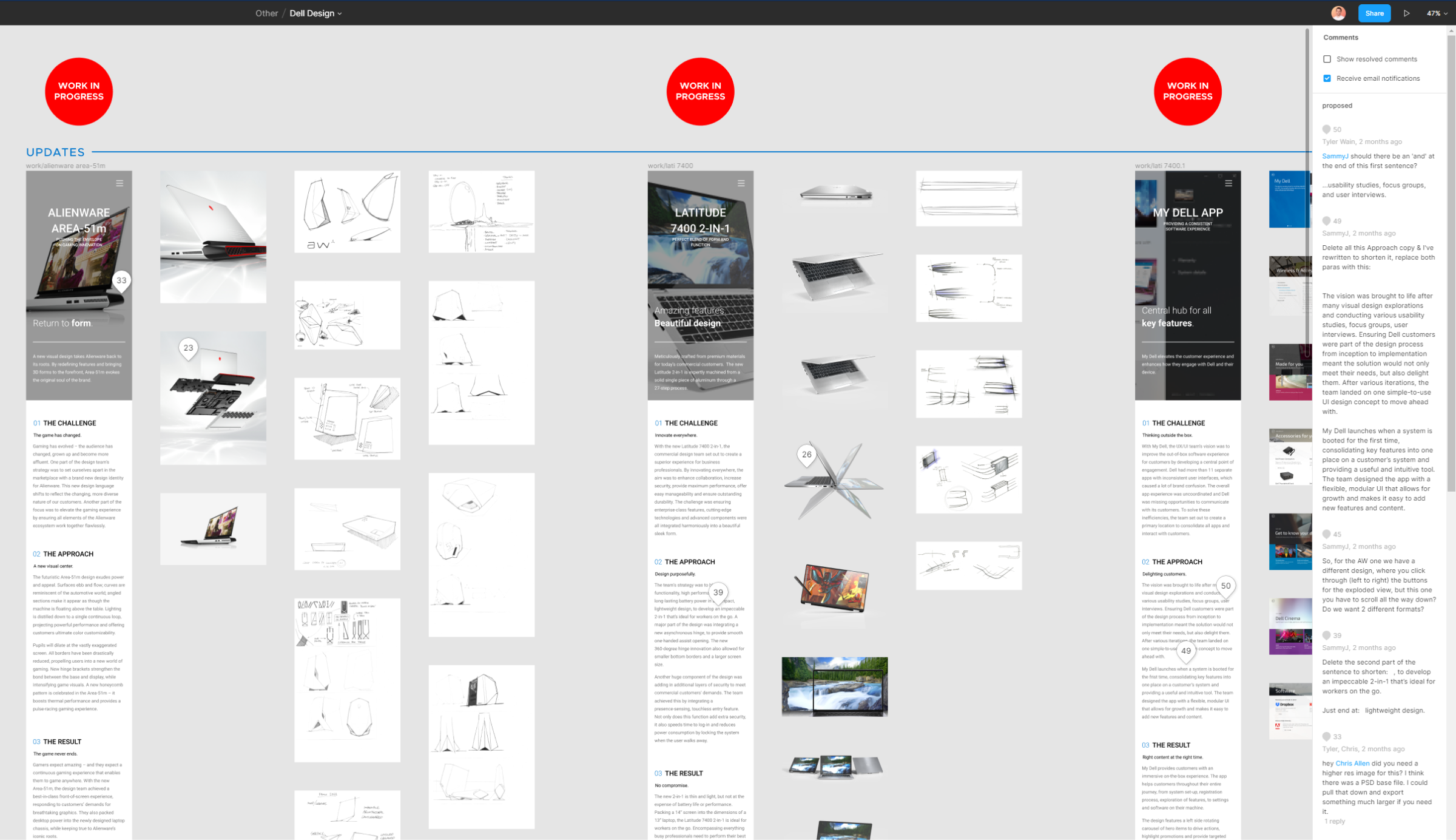
To keep the team aligned, I chose to migrate the Illustrator and XD files into a single Figma project. This helped us avoid issues that had slowed us and other teams in the past, mainly not knowing which design file to reference, or where to leave feedback.
RESULTS
A scalable site to build upon.
The EDG site has come a long way from the early versions. Despite the small team, lack of allocated time and resources, we were able to create a website that excited our Dell executive and site visitors alike.